
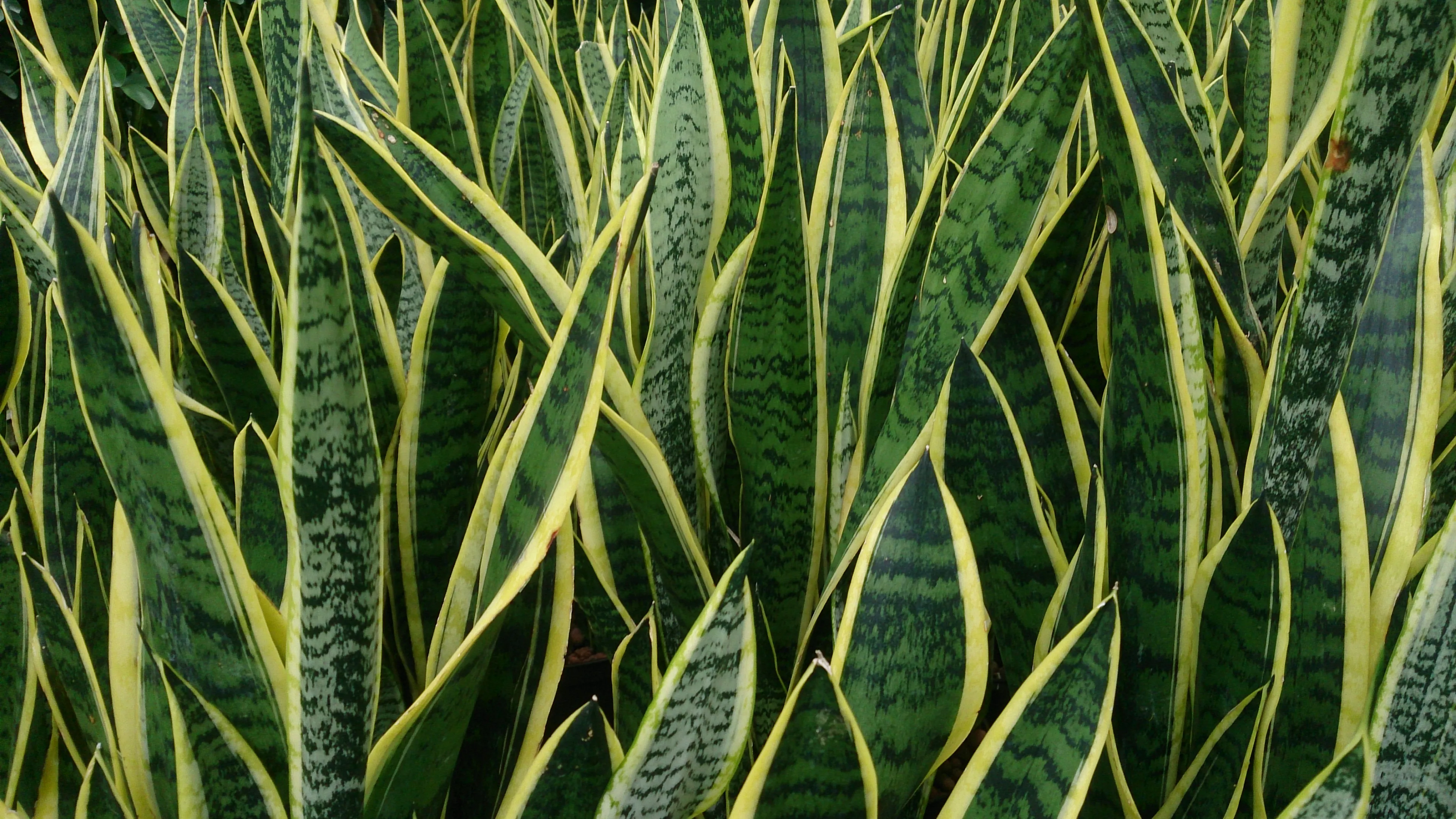
Plant Care Guide
Snake Plant (Sansevieria)
Dracaena trifasciata
Care guide and energetic properties for Sansevieria — the architectural guardian.
Native range
Dry regions of West and Central Africa, from Nigeria through the Congo basin
Dry tropical and rocky woodland
What this means in practiceBuilt for long droughts and bright, often direct light. Stores water in upright fleshy leaves; let soil dry completely between waterings. Overwatering, not neglect, is the only thing that kills it.
Where this plant wants to sit
Bright indirect
Best windows: East · South · West · North
Avoid: direct midday sun
Snake plants tolerate a wider light range than almost any other houseplant — growth is faster in brighter spots but they survive almost anywhere.
How to know when to water
Fully dry
Thirst signal:Leaves go slightly soft and may wrinkle along their length; stems remain upright until very late.
Overwatering is the only realistic way to kill a snake plant. When in doubt, don't. Wait another week.
Low to bright indirect
Every 2-4 weeks, let fully dry
Average household
15-28°C
The Indestructible Houseplant
Snake plants — now officially reclassified as Dracaena trifasciata, though most of us still call them Sansevieria — are about as close to zero-maintenance as houseplants get. Their stiff, upright leaves add bold architectural interest to any space, and they tolerate neglect that would finish off most other plants. Understanding why they’re so resilient makes caring for them a lot more intuitive.
Light
Snake plants accept anything from bright indirect light to genuinely dim corners — one of the few plants that can honestly be described as low-light tolerant without caveats. They grow faster and produce more vivid colouring in moderate to bright light but remain healthy in spots that would cause most plants to decline. Direct harsh sun bleaches the leaves, so filtered or indirect light is ideal.
Watering
Snake plants store water and nutrients in their underground rhizomes — thick, horizontal underground stems that evolved to accumulate reserves during periods of rain and sustain the plant through drought. This is what makes them so drought-tolerant. The rhizomes also store starches and proteins, giving the plant an internal buffer against extended neglect.
The critical rule is simple: let the soil dry out completely between waterings. In summer, every two weeks is typical; in winter, once a month or even less. When in doubt, wait. The rhizome reserves mean the plant is always better off slightly too dry than sitting in soggy soil. A mushy base or yellowing stems is almost always overwatering, not underwatering.
Oxygen at Night
Snake plants use CAM photosynthesis — the same strategy as aloe and cacti. Rather than opening their leaf pores (stomata) during the day, which would cause significant water loss in arid conditions, CAM plants keep them closed during daylight and open them only at night to absorb carbon dioxide. That CO2 is stored as an organic acid and used the following day when sunlight returns to drive photosynthesis.
The byproduct of this gas exchange happening at night is that oxygen is also released at night — the opposite of most plants. This is the basis for their reputation as ideal bedroom plants.
Soil and Potting
Use a very free-draining mix — cactus and succulent compost, or standard potting compost with a generous amount of perlite and coarse sand. Terracotta pots are ideal because their porous walls actively wick moisture away from the soil. Drainage holes are essential.
Temperature and Humidity
Happy between 15 and 28 degrees Celsius, comfortable in average household humidity. Cold draughts and prolonged exposure below 10 degrees can cause scarring on the leaves.
Propagation
Propagate by division (separate the root clump when repotting) or by leaf cuttings: cut a healthy leaf into ten-centimetre sections, let the cuts callous for a day, then place upright in moist sandy soil. New shoots emerge from the base over several weeks. Snake plants are not fast; give them time.
Common Issues
- Mushy base or yellow leaves — Overwatering. Remove affected leaves, dry out the soil, reduce your schedule.
- Wrinkling or curling leaves — The plant is thirsty. Water thoroughly and it should recover.
- Brown tips — Low humidity or fluoride in tap water. Try filtered or rainwater.
- Mealybugs or spider mites — Wipe down with soapy water.
Bold, architectural, and genuinely hard to kill — the snake plant is the ideal companion for anyone who wants living greenery without complexity.
Grows Well With
Related Reading
Explore the Mist Perspective
Discover the spiritual side of Snake Plant (Sansevieria)
Snake Plant (Sansevieria) resonates with Fire energy, the Root (Muladhara) chakra, and is ruled by Mars. Explore the full energetic profile, ideal placement, and spiritual properties in the Mist collection.
View Energy Profile